

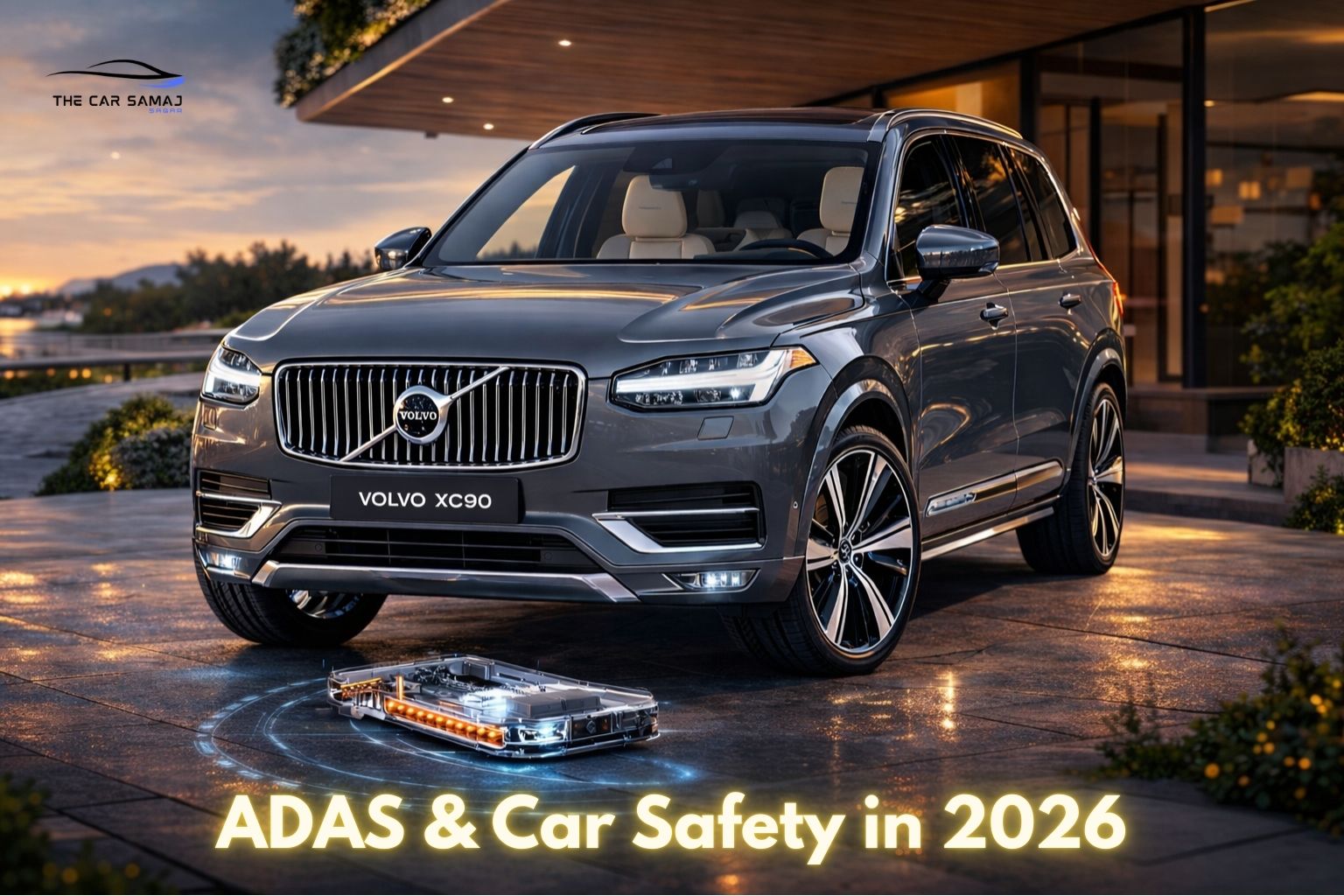
ADAS & Car Safety in 2026: How Smart Technology is Transforming Vehicle Safety
The automotive world is entering a completely new safety era. For decades, car safety focused mainly on structural strength, airbags, and seatbelts. But in 2026, the focus has shifted toward preventing accidents before they happen.
Thanks to Advanced Driver Assistance Systems (ADAS), modern cars are becoming smarter than ever. These systems use cameras, radar, sensors, and artificial intelligence to help drivers avoid accidents and improve road safety.
From automatic emergency braking to driver monitoring systems, the next generation of cars is designed not just to survive crashes but to actively prevent them.
For buyers in India, this means safety technology that was once limited to luxury cars is now appearing in mid-range SUVs and even premium hatchbacks.
In this detailed guide from The Car Samaj, we explore how ADAS and vehicle safety are changing in 2026, what new regulations are coming in India, and what car buyers should expect in the near future.
What is ADAS in Cars?
Advanced Driver Assistance Systems (ADAS) are a set of electronic technologies designed to assist drivers and reduce the risk of accidents.
These systems rely on multiple sensors, cameras, and artificial intelligence algorithms that continuously monitor the surroundings of the vehicle.
ADAS can detect objects, pedestrians, lane markings, and other vehicles in real time.
When the system senses danger, it can:
- Warn the driver
- Assist with steering
- Automatically apply brakes
- Prevent collisions
In simple words, ADAS acts like a digital co-driver that is always alert.
Some of the most common ADAS features include:
- Automatic Emergency Braking (AEB)
- Adaptive Cruise Control
- Lane Departure Warning
- Blind Spot Detection
- Driver Monitoring System
- Traffic Sign Recognition
- Forward Collision Warning
These technologies are now becoming standard safety features in modern cars.
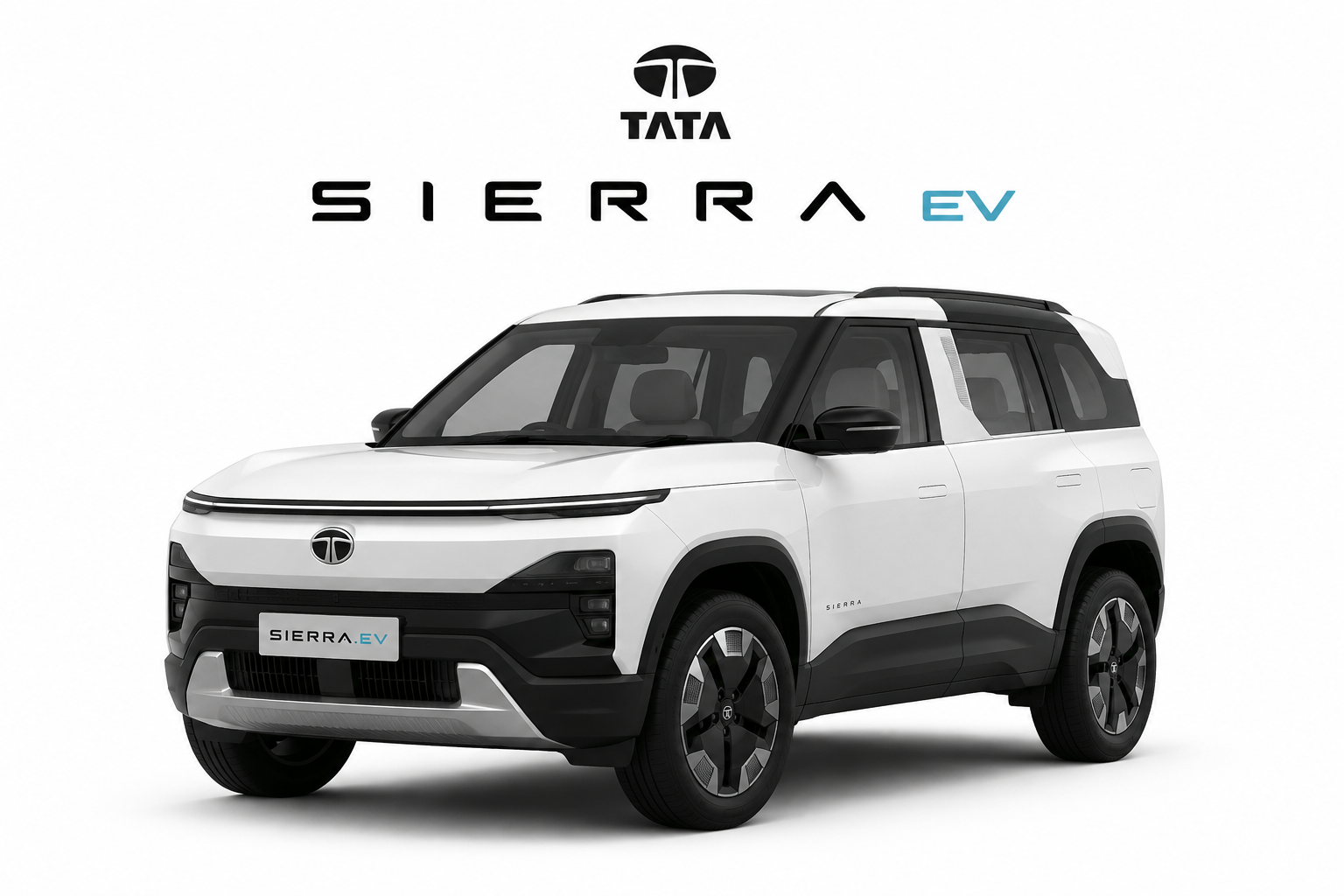
If U Known About EV Revolution in India
Visit – India’s EV Revolution: Upcoming Electric Cars in India 2026 | The End of Petrol Cars?
Why 2026 is a Major Turning Point for Car Safety
The year 2026 is considered a milestone in automotive safety.
Several major developments are happening simultaneously:
- Governments are introducing strict safety mandates
- Global safety agencies are updating testing standards
- Automakers are adopting AI-powered driver assistance systems
- Technology costs are dropping, making ADAS more affordable
As a result, car safety is shifting from passive protection to active prevention.
Instead of protecting occupants after a crash, modern vehicles are designed to detect danger early and stop accidents from happening.
ADAS Revolution in India
India is rapidly catching up with global safety trends.
Until recently, advanced safety features were mostly limited to premium vehicles priced above ₹30 lakh. However, this is changing quickly.
Today, several mid-segment cars in India already offer Level 2 ADAS technology.
Government Safety Mandates
The Ministry of Road Transport and Highways (MoRTH) has introduced a major regulation that will impact vehicle safety in India.
Starting April 1, 2026, newly launched commercial vehicles and large passenger vehicles must include a baseline ADAS package.
Mandatory systems include:
- Advanced Emergency Braking System (AEBS)
- Lane Departure Warning
- Driver Drowsiness Detection
Existing models will need to comply with these requirements by October 2026.
This move aims to significantly reduce highway accidents and commercial vehicle crashes.
If U Known About New Cars Under ₹10 Lakh Coming in 2026
Visit – New Cars Under ₹10 Lakh Coming in 2026 – Tata, Maruti & VW Budget Launches
ADAS is Becoming Affordable
Another big reason behind the ADAS boom in India is technology localization.
Companies like Mobileye and Bosch are expanding their presence in India to manufacture ADAS components locally.
Local production can reduce ADAS costs by up to 40%, making it possible for automakers to include these features in affordable vehicles.
Because of this, cars priced between ₹12 lakh and ₹20 lakh are expected to offer advanced driver assistance features in the coming years.
For Indian buyers, this means luxury-level safety at mainstream prices.
Bharat NCAP and the Future of Safety Ratings
India introduced Bharat NCAP (BNCAP) to improve vehicle safety standards.
Currently, crash tests focus mainly on structural safety and occupant protection.
However, the upcoming BNCAP 2.0 update expected in 2027 will place greater emphasis on active safety technologies like ADAS.
Vehicles aiming for a 5-star safety rating will likely need:
- Reliable ADAS systems
- Pedestrian protection technology
- Strong crash structures
- Advanced driver monitoring
Automakers launching new models in 2026 are already preparing for these future requirements.
Euro NCAP 2026: Global Safety Standards Are Changing
Europe’s Euro NCAP safety organization strongly influences global vehicle design.
In 2026, Euro NCAP is introducing one of the biggest safety testing updates in its history.
Instead of testing individual features separately, the organization will now evaluate the complete safety system of a vehicle.
The new safety model focuses on four key areas.
1 Safe Driving
This category evaluates driver assistance features that help prevent risky driving behavior.
2 Crash Avoidance
Testing focuses on how effectively the car can detect danger and avoid collisions.
3 Crash Protection
Traditional crash tests still measure how well the vehicle protects passengers.
4 Post-Crash Safety
Systems that help rescue passengers after an accident are also evaluated.
This comprehensive approach ensures that safety systems work effectively in real-world scenarios.
Driver Monitoring Systems Are the Next Big Thing
One of the biggest safety trends of 2026 is the Driver Monitoring System (DMS).
Unlike traditional safety technologies, DMS uses in-cabin cameras to observe the driver.
The system can detect:
- Driver fatigue
- Eye distraction
- Drowsiness
- Lack of steering input
If the driver becomes inattentive, the car can:
- Trigger warning alerts
- Vibrate the steering wheel
- Slow down automatically
These systems are expected to become mandatory in many global markets.
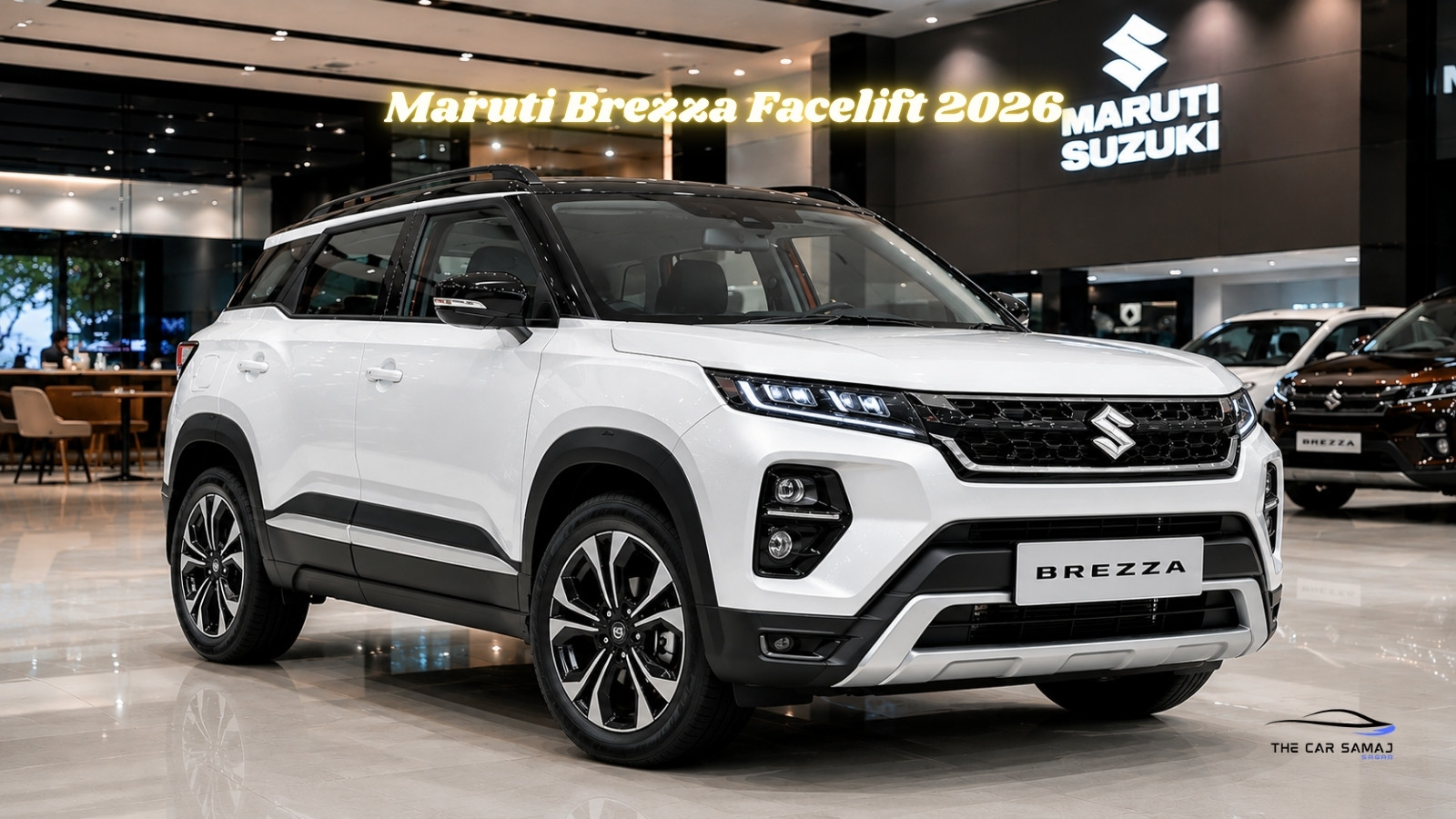
If U Known About 2026 Maruti Suzuki Brezza Facelift
Visit – 2026 Maruti Suzuki Brezza Facelift – New Design, Features & Launch Details
The Rise of Sensor Fusion Technology
Modern ADAS systems rely on something called sensor fusion.
Instead of using a single sensor, vehicles now combine data from multiple technologies, including:
- Cameras
- Radar
- LiDAR
- Ultrasonic sensors
These systems work together to create a real-time 360-degree 3D map of the surroundings.
This allows the vehicle to detect:
- Pedestrians
- Cyclists
- Vehicles
- Road signs
- Lane markings
With sensor fusion, ADAS systems can make faster and more accurate decisions, improving road safety significantly.
Smarter Safety for Electric Vehicles
Electric vehicles are also accelerating the adoption of ADAS technology.
EVs rely heavily on advanced electronic architecture, which allows safety systems to react faster.
For example, Automatic Emergency Braking can respond more quickly in electric vehicles because their braking systems are fully electronic.
Additionally, modern EV safety systems include:
- Battery isolation after crashes
- Thermal runaway protection
- Automatic hazard activation
- Multi-collision braking
These technologies help protect both passengers and rescue teams after an accident.
New Post-Crash Safety Technologies
Safety does not end once a crash occurs.
New regulations in 2026 focus on post-crash protection systems.
These features include:
Multi-Collision Braking
Automatically stops the car after the first impact to prevent secondary accidents.
Automatic Emergency Calls
Some vehicles can automatically contact emergency services after a crash.
Smart Door Unlocking
Electronic door handles remain functional after a collision so that passengers can be rescued quickly.
These innovations ensure that safety continues even after an accident happens.
Why ADAS Will Become a Key Buying Factor
Car buyers today are more safety conscious than ever.
While earlier buyers mainly focused on engine performance, mileage, and features, safety is now becoming a top priority.
ADAS technologies are expected to become one of the most important factors when choosing a new car.
In the near future, buyers may start asking questions like:
- Does this car offer Level 2 ADAS?
- Does it have driver monitoring?
- How reliable is its automatic braking system?
This shift will push automakers to invest more heavily in software-driven safety systems.
The Future of Car Safety
Looking ahead, the future of automotive safety will revolve around automation, artificial intelligence, and real-time data processing.
Upcoming vehicles will feature:
- More advanced autonomous driving systems
- Predictive collision avoidance
- AI-based driver behavior analysis
- Vehicle-to-vehicle communication
Eventually, these technologies could lead to a world where road accidents become extremely rare.
Is Complete Digitalization in Cars Always a Good Idea?
The automotive industry has made remarkable progress in improving vehicle safety technologies over the years. It is encouraging to see car manufacturers continuously investing in research, innovation, and engineering to make vehicles safer for drivers and passengers. Modern technologies such as advanced driver assistance systems, improved crash structures, and intelligent safety software are clear examples of how digitalization and modernization are shaping the future of automotive safety.
However, while innovation is essential, there is an ongoing debate about whether complete digitalization and fully automated features are always the best approach. In recent years, many car manufacturers have started replacing traditional mechanical components with electronic or touch-based systems. Features like electronic door handles, retractable handles, touch-based controls, and steer-by-wire steering systems are becoming more common in modern vehicles.
Although these technologies often provide a premium experience, futuristic design, and convenience, they can sometimes raise concerns about reliability and usability, especially in emergency situations. For example, electronic door handles or touch-based unlocking systems may become difficult to operate if the vehicle experiences a system failure or electrical issue after an accident. In such scenarios, a simple mechanical mechanism can sometimes be quicker and easier to use.
Similarly, advanced systems such as steer-by-wire technology rely heavily on software, sensors, and electronic communication between components. While these systems can deliver smoother control and advanced driving features, some critics argue that software delays, technical faults, or system shutdowns could potentially create safety risks if not designed with sufficient redundancy and fail-safe mechanisms.
Because of this, many automotive experts believe that the best approach is a balanced combination of innovation and practicality. Technology should enhance safety and convenience, but it should also ensure that essential functions remain reliable, intuitive, and accessible during emergencies.
The evolution of car safety is undoubtedly positive, and digital technology will continue to play a crucial role in shaping the future of mobility. At the same time, thoughtful design decisions that prioritize user safety, simplicity, and reliability are equally important.
What do you think about this shift toward fully digital and automated car features?
Do you believe complete digitalization improves safety, or should manufacturers maintain more traditional mechanical controls for critical functions?
What do you think about fully digital car features? Should car manufacturers keep important controls mechanical for safety? Share your thoughts in the comments. The Car Samaj is always here to help if you have any questions.
Share your thoughts in the comments below. Your perspective helps create meaningful discussions about the future of automotive technology.
If you have any questions related to cars, safety technologies, or the latest automotive innovations, The Car Samaj is always here to help.
Final Thoughts
The year 2026 marks a major transformation in vehicle safety.
ADAS technology is no longer limited to expensive luxury vehicles. It is rapidly becoming a standard safety feature across the automotive industry.
With new regulations, improved safety testing, and falling technology costs, drivers will soon experience smarter and safer vehicles than ever before.
For Indian buyers, this is great news.
Cars are no longer just machines that transport us from one place to another.
They are becoming intelligent safety partners that actively protect us on every journey.
And in the coming years, ADAS will likely become as essential as airbags and seatbelts.
FAQs



Leave a Reply