

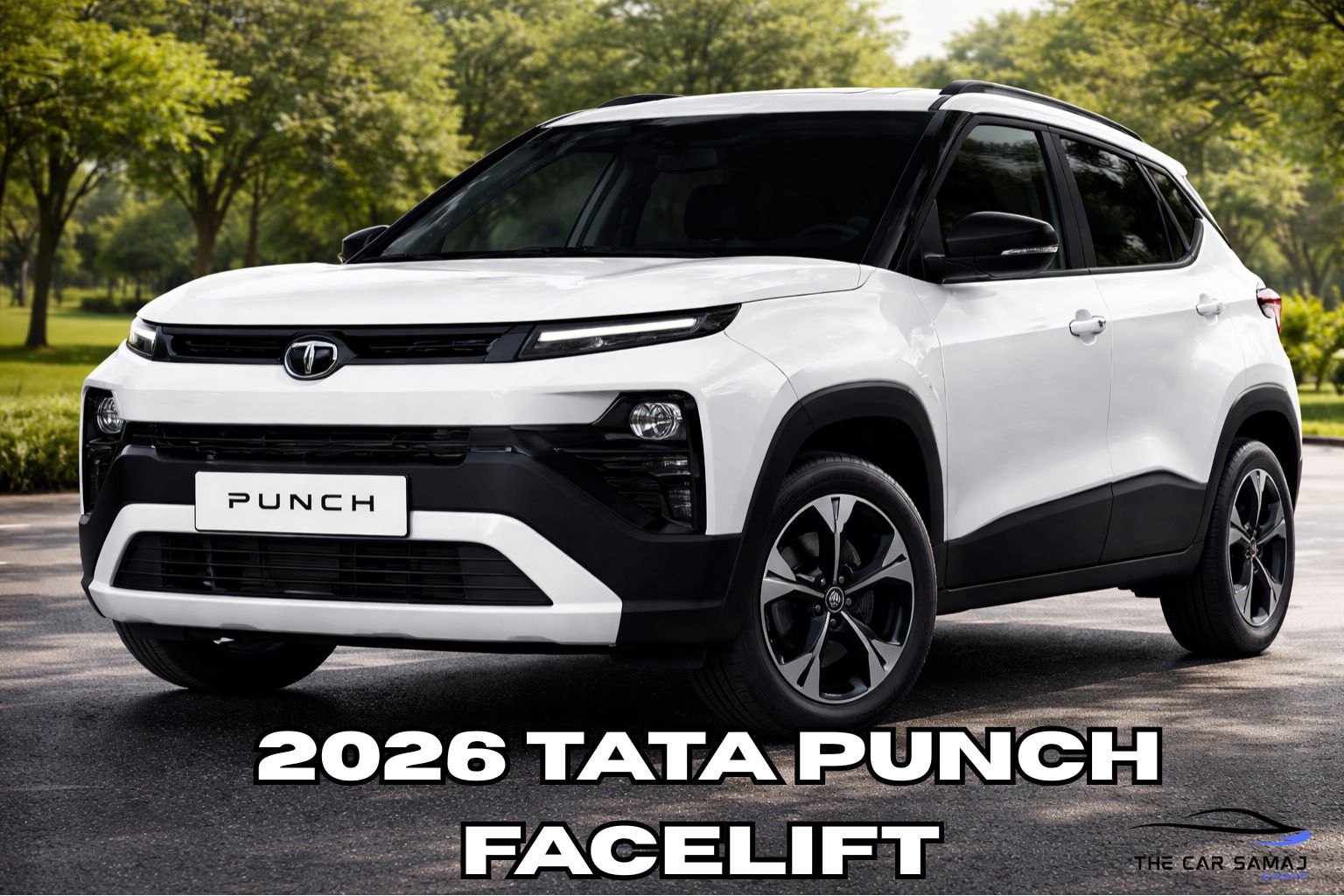
2026 Tata Punch Facelift: Price, Features, Interior, Safety & Full Honest Review
In the Indian car market, if there’s one micro-SUV that has consistently won both trust and sales, it’s the Tata Punch from Tata Motors. Since its launch, the Punch has been a vehicle that offers the perfect mix of safety, practicality, and a rugged feel. After crossing sales of over 6 lakh units, Tata has introduced a facelifted version of the Punch for 2026, which can be treated not just as a cosmetic update but as an overall evolution.
Exterior Design – The Punch now looks even more like an SUV.
Looking at the front profile, the old bulky halogen setup has been replaced with sleek LED DRLs, which now give it a thinner and wider look. These DRLs are not just for daytime visibility but also significantly enhance its overall road presence. The headlamps are now positioned vertically stacked in the bumper, giving the Punch a unique design in this segment. This layout is becoming common in higher-segment SUVs these days, which makes the Punch facelift visually feel more “upmarket.”
The changes on the rear side are also quite significant. It now features a connected LED taillamp design, which makes the tailgate look visually wider. This design element is quite popular with buyers these days, as it gives the car a premium look even at night. The rear bumper has also been made slightly more muscular, featuring a faux silver skid plate-type finish, which reinforces the Punch’s SUV character.
The side profile has largely been kept the same, but the new 16-inch diamond-cut alloy wheels have significantly improved the overall stance.
Interior & Technology – Budget Feel Se Premium Experience Tak
The interior is where the 2026 Tata Punch facelift delivers the biggest surprises. The old Punch’s cabin was practical and durable but felt a bit basic. With the facelift, Tata has largely addressed this weakness.
The biggest highlight is the large 10.25-inch touchscreen infotainment system. Not only is this screen larger in size, but it also significantly improves the display clarity, response, and layout. Features like wireless Android Auto and Apple CarPlay make daily usability easier, especially for city users who rely heavily on navigation and music.
The driver now gets a 7-inch digital instrument cluster, which displays essential information in a clean and readable format. Speed, fuel efficiency, trip data—everything is presented in a modern digital layout, which is a significant improvement over the previous analog-heavy setup.
The steering wheel is also new—a two-spoke design with an illuminated Tata logo, which is now common in Tata’s higher-end models. This isn’t just for aesthetics; it also enhances convenience during driving thanks to the steering-mounted controls.
In terms of comfort features, the facelifted Punch features wireless phone charging, an improved climate control panel, and the use of better quality materials. The AC controls now look cleaner and more modern, with a touch-based panel complemented by some physical toggles, which is a practical approach for Indian conditions.
Cabin space remains a strong point of the Punch. Both headroom and legroom are sufficient, especially considering it’s a micro-SUV. Daily commutes, weekend trips, or family use—the interior feels well-balanced for every scenario.
Engine & Performance – City Focus Ke Saath Highway Confidence
In the 2026 Tata Punch facelift, Tata has prioritized reliability and efficiency in its engine options. The main focus of this facelift is not a “radical performance change,” but rather making the overall driving experience smoother and more versatile.
The base engine remains the 1.2-liter Revotron petrol engine, which offers refined and predictable performance, ideal for city driving. Smooth throttle response and manageable power delivery in traffic make the Punch stress-free for daily use. The manual and AMT gearbox options are useful for buyers who want both convenience and fuel efficiency.
The CNG option has also been retained, which is important for buyers who prioritize low running costs. The twin-cylinder CNG layout manages boot space a little better, which is an improvement over the previous generation.
The most discussed aspect of the facelift is the possible turbo-petrol engine. Industry reports and market trends indicate that Tata might consider a turbo option to make the Punch future-ready, significantly improving highway performance and overtaking confidence. If this engine is adapted from the Nexon family, the Punch could become a proper city and highway all-rounder. However, it’s important to clarify that the final confirmation on the turbo engine will depend on the specific variant.
The suspension setup is tuned for Indian roads—slightly stiff, ensuring the car remains stable even on bad roads. With its high ground clearance, the Punch facelift can confidently handle broken roads, speed breakers, and village roads.
Safety – Punch’s biggest strength is now even stronger.
If you had to define the Tata Punch’s identity in one word, that word would be safety. Even in the facelifted version, Tata hasn’t compromised on this core strength.
The 2026 Punch facelift features six airbags as standard, which is a strong statement in this segment. Features like Electronic Stability Control, Traction Control, and Hill Hold Assist give the driver extra confidence in both daily driving and emergency situations.
Another major highlight of this facelift is the 360-degree camera system, which is quite helpful in tight parking spaces and city traffic. Features like Blind View Monitor have also been introduced, taking safety to the next level during lane changes and on congested roads.
Tata’s strong body structure and safety-first engineering approach give the Punch a “fortress-like” feel in the micro-SUV segment. This is especially important for buyers looking for a car for family use and who don’t want to compromise on safety.
Variants, Pricing & Final Verdict – Kya 2026 Punch Worth It Hai?
Tata has introduced the 2026 Tata Punch facelift with a simplified variant structure, featuring personas like Smart, Pure, Adventure, and Accomplished. Each variant has a clear purpose—some for basic practicality, some for rugged styling, and others for a premium, feature-loaded experience.
Expected pricing starts at around ₹6 lakh, and the top variant could go up to the ₹10 lakh range (ex-showroom). In this price band, the Punch facelift directly competes with models like the Hyundai Exter and Maruti Fronx. However, in terms of safety, build quality, and rugged appeal, the Punch carves out its own niche.
2026 Tata Punch Price List (Ex-Showroom)
| Variant (Persona) | Petrol MT (1.2L NA) | Petrol AMT (1.2L NA) | Turbo Petrol MT (1.2L) | iCNG MT (Twin Cylinder) | iCNG AMT (Twin Cylinder) |
|---|---|---|---|---|---|
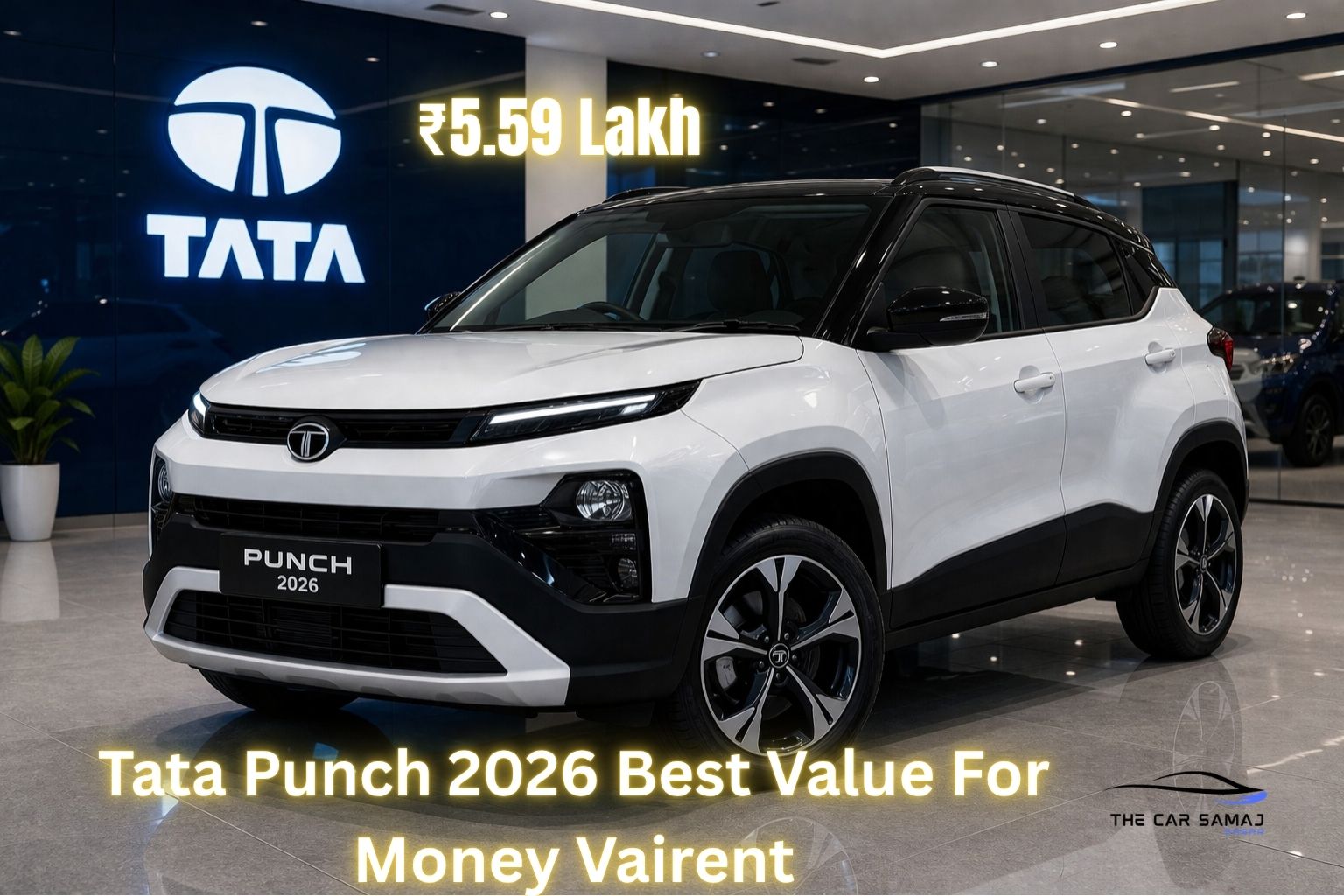
| Smart | ₹5.59 Lakh | — | — | ₹6.69 Lakh | — |
| Pure | ₹6.49 Lakh | — | — | ₹7.49 Lakh | — |
| Pure Plus | ₹6.99 Lakh | ₹7.54 Lakh | — | ₹7.99 Lakh | ₹8.54 Lakh |
| Pure Plus S | ₹7.34 Lakh | ₹7.89 Lakh | — | ₹8.34 Lakh | — |
| Adventure | ₹7.59 Lakh | ₹8.14 Lakh | ₹8.29 Lakh | ₹8.59 Lakh | ₹9.14 Lakh |
| Adventure S | ₹7.94 Lakh | — | — | ₹8.94 Lakh | ₹9.49 Lakh |
| Accomplished | ₹8.29 Lakh | ₹8.84 Lakh | — | ₹9.29 Lakh | — |
| Accomplished+ S | ₹8.99 Lakh | ₹9.54 Lakh | ₹9.79 Lakh | — | ₹10.54 Lakh |
The 2026 Tata Punch Facelift is not just a cosmetic update. It’s a well-thought-out upgrade that balances design, technology, safety, and usability. If you’re looking for a small SUV that’s easy to drive in the city, feels confident on highways, and is safe for the family, then the Punch facelift is a strong, sensible, and future-ready choice.
From The Car Samaj’s perspective, this facelift not only keeps the Punch relevant but also represents a solid step towards setting a benchmark in the micro-SUV segment.
What do you think of the 2026 Tata Punch facelift? Share your honest opinion in the comments
Explore More on The Car Samaj
Visit – Are Supercars Really an Investment? Cristiano Ronaldo’s Billionaire Logic Explained
Visit – India vs USA Car Culture: Why Street Racing Stories Go Viral but Roads Demand Safety
FAQs





Leave a Reply